Subscribe to our newsletter
Enjoy practical advice, real talk, and notification when new resources drop.
Teachers: Niceness vs Kindness Explained
Explore the crucial difference between niceness and kindness in education. Learn why effective teaching involves correction, structure, and consistency, rather than just being liked. Discover how teachers can build meaningful relationships while maintaining effective educational practices.
REAL TALK REFLECTION
Johnny Charles
7/4/20269 min read


Are You Trying to Be Liked or Are You Trying to Be Effective?
Let’s talk about something that gets a lot of teachers caught up, especially new teachers.
Niceness versus kindness.
At first, they sound like the same thing. They both sound positive. They both sound warm. They both sound like something a good teacher should have.
But they are not the same.
Niceness is often about being liked.
Kindness is about doing what is right.
And in the classroom, those two things are not always walking in the same direction.
Now let me be clear. It is not wrong to want your students to like you. Teachers are human. We are not robots with lesson plans and laminated objectives plugged into our backs. We are people. We want connection. We want community. We want to feel like the students in front of us trust us, respect us, and maybe even enjoy being around us.
That is natural.
Since the beginning of time, people have survived in groups. Belonging matters. Connection matters. And as a teacher, your classroom becomes one of your daily groups.
So yes, it feels good when students like you.
But the question is this:
Are you building that relationship through niceness or through kindness?
Because one will build your classroom.
The other will quietly break it down.
Niceness Is Often About Comfort
Niceness says, “I want you to like me right now.”
Niceness avoids the hard conversation because the hard conversation might make things awkward.
Niceness gives another warning after the final warning.
Niceness says, “I’ll let it slide this time,” even though this time has happened six times.
Niceness changes the expectation because the student gave a good explanation, made a sad face, or promised they would never do it again.
Niceness is when a teacher chooses temporary peace over long-term growth.
And let’s be honest. Sometimes niceness feels good because it keeps us comfortable.
It helps us avoid conflict.
It helps us avoid pushback.
It helps us avoid the eye roll, the attitude, the parent email, the student saying, “You doing too much.”
But avoiding discomfort is not the same as helping students grow.
That is where we have to tell the truth.
Sometimes when teachers say, “I’m just being nice,” what they really mean is, “I don’t want to deal with the conflict that accountability might bring.”
And listen, I understand that.
Conflict is not easy.
Most teacher preparation programs do not teach you how to sit in conflict with dignity. They teach you how to write lesson plans, analyze data, and maybe design a seating chart. But they do not always teach you how to look a student in the eye after they crossed a line and say, calmly, “I care about you too much to pretend that was okay.”
That is a soft skill.
That is a muscle.
That is part of the craft.
Kindness Does Not Always Feel Soft
Kindness is different.
Kindness says, “I care about you too much to let you stay stuck.”
Kindness is doing what is best for the student, even when the student does not like it in the moment.
Kindness is self-sacrificing because it may cost you popularity.
It may cost you comfort.
It may cost you the easy laugh.
It may cost you being seen as the “cool teacher” for a few.
But kindness is rooted in growth.
Kindness is giving the consequence and still preserving the relationship.
Kindness is calling home about the behavior and still greeting the student warmly the next day.
Kindness is assigning lunch detention and using that time to reflect, repair, and reset.
Kindness is not embarrassing a student, but it is also not pretending their choices have no impact.
Kindness is correction with dignity.
That is the difference.
Niceness wants students to feel good about you.
Kindness wants students to become better because of you.
“You Took My Niceness for Weakness”
We have all heard somebody say, “They took my kindness for weakness.”
But many times, that is not what happened.
They did not take your kindness for weakness.
They took your niceness for weakness.
Because kindness has structure.
Kindness has boundaries.
Kindness has a backbone.
Kindness can smile and still say no.
Kindness can love students and still hold them accountable.
Kindness can give grace without giving away the whole classroom.
Niceness, on the other hand, often has no clear line. It gives and gives and gives until the teacher becomes frustrated, resentful, and reactive.
Then one day, the teacher snaps.
Now the classroom sees the switch.
The teacher goes from “I’m cool with everything” to “Now everybody is getting written up.”
That is when discipline starts losing dignity.
Not because the teacher is a bad person, but because niceness delayed the accountability until frustration took over.
And when frustration becomes the driver, students do not experience correction.
They experience our reaction.
That is why new teachers need systems.
Not just good intentions.
Systems.
Accountability Is Not Being Mean
One of the biggest fears new teachers have is this:
“If I set a firm boundary, will students think I’m mean?”
Maybe.
For a moment.
But students thinking you are mean does not automatically mean you were mean.
Sometimes students call accountability “mean” because they are disappointed they did not get their way.
That does not make the boundary wrong.
That makes the boundary real.
The goal is not to be harsh.
The goal is to be clear.
You can be firm without being disrespectful.
You can be consistent without being cold.
You can correct a student without talking to them like they are grown.
You can hold a boundary without bringing clap-back energy into the room.
That is where emotional discipline comes in.
As teachers, we have to separate our emotions from our actions.
You can feel annoyed and still act professionally.
You can feel disrespected and still respond with dignity.
You can feel tired and still follow the process.
That is why a discipline framework matters.
Because when you already know the next step, you do not have to make a decision from your emotions.
If the next step is a one-on-one conversation, have the conversation.
If the next step is lunch detention, assign the lunch detention.
If the next step is a message home, send the message home.
If the next step is a referral, write the referral.
Not because you are mad.
Not because you are trying to prove a point.
Not because your ego got touched.
Because that is the process.
A framework protects you from disciplining out of emotion.
And it protects students from having to guess which version of you is showing up today.
Sometimes the Kindest Thing Is Space
Let’s be real.
There are moments when a student gets under your skin.
Not your teacher skin.
Your real skin.
Your “I’m somebody’s grown child and I pay bills” skin.
And in those moments, the kindest thing you can do might be to pause.
You do not always have to address everything at the peak of emotion.
Sometimes you can say:
“Right now, I’m frustrated, and I don’t want to respond in a way that damages our relationship. We’re going to take some space, and we’ll talk about this tomorrow.”
That is not weakness.
That is wisdom.
But here is the important part.
Taking space does not mean pretending it never happened.
Niceness says, “I feel better now, so let’s forget it.”
Kindness says, “I feel better now, so I can address it with clarity.”
The next day, you greet the student fresh.
No grudge.
No silent treatment.
No passive-aggressive comments.
No “I’m still mad at you” energy floating around the room.
You start fresh emotionally.
But you continue the accountability process professionally.
That is the balance.
Fresh heart.
Clear boundary.
Black Educators and the Pressure to Shrink
For Black educators, this conversation hits differently.
Because many of us are not just balancing warmth and structure.
We are balancing perception.
We know how quickly confidence can be called arrogance.
We know how quickly firmness can be called aggression.
We know how quickly passion can be called “too much.”
We know how quickly our cultural communication, our voice, our presence, our humor, our directness, and our standards can be misunderstood by students, families, coworkers, and administrators who are not used to seeing us lead without shrinking.
So yes, Black educators often carry an extra layer.
We want to be relational, but we do not want to be reduced to entertainment.
We want to be warm, but we do not want our warmth to be exploited.
We want to be professional, but we do not want professionalism to mean erasing ourselves.
We want to build strong relationships, but we do not want to audition for acceptance every day.
That balance begins with self-awareness.
Know who you are.
Know your values.
Know your teaching style.
Know your triggers.
Know your tone.
Know your strengths.
Know the parts of your personality that build connection, and know the parts that need boundaries and refinement.
Because when you know who you are, you do not need everybody else to define you.
You are not going to be every student’s favorite teacher.
You are not going to meet every family’s personal preference.
You are not going to make every coworker comfortable.
And that is okay.
As long as you are professional, reflective, respectful, and effective, you do not have to shrink yourself to be accepted.
You can be warm and still be firm.
You can be culturally bold and still be professional.
You can be relational and still have standards.
You can be yourself and still grow.
That is the work.
What Real Kindness Looks Like in the Classroom
Real kindness is not just smiles, second chances, and “Don’t worry about it.”
Sometimes real kindness looks like:
“You owe this class a better version of yourself.”
Sometimes it sounds like:
“I care about you, but that choice still has a consequence.”
Sometimes it looks like:
“I’m not going to argue with you in front of everybody. We’ll talk privately.”
Sometimes it sounds like:
“You are welcome here, but that behavior is not.”
Sometimes it looks like:
“Yesterday was rough. Today is new. And we still need to repair what happened.”
Real kindness gives students a path back into the community.
That matters.
Because accountability without restoration can turn into punishment.
But restoration without accountability turns into avoidance.
Students need both.
They need to know the boundary.
They need to understand the impact.
They need a chance to repair.
They need to be welcomed back without shame.
That is how classroom culture grows.
Not through fake peace.
Through honest repair.
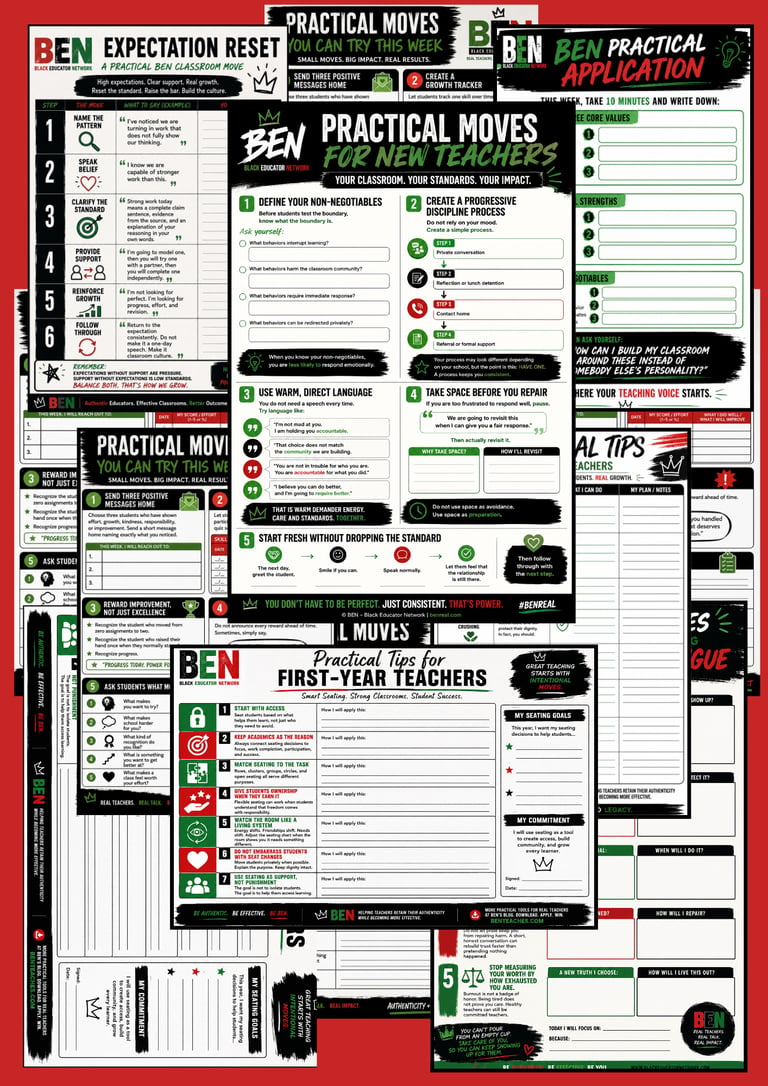
Practical Moves for New Teachers
If you are a new teacher trying to move from niceness to kindness, start here.
1. Define Your Non-Negotiables
Before students test the boundary, know what the boundary is.
Ask yourself:
What behaviors interrupt learning?
What behaviors harm the classroom community?
What behaviors require immediate response?
What behaviors can be redirected privately?
When you know your non-negotiables, you are less likely to respond emotionally.
2. Create a Progressive Discipline Process
Do not rely on your mood.
Create a simple process.
For example:
Step 1: Private conversation
Step 2: Reflection or lunch detention
Step 3: Contact home
Step 4: Referral or formal support
Your process may look different depending on your school, but the point is this:
Have one.
A process keeps you consistent.
3. Use Warm, Direct Language
You do not need a speech every time.
Try language like:
“I’m not mad at you. I am holding you accountable.”
“That choice does not match the community we are building.”
“You are not in trouble for who you are. You are accountable for what you did.”
“I believe you can do better, and I’m going to require better.”
That is warm demander energy.
Care and standards.
Together.
4. Take Space Before You Repair
If you are too frustrated to respond well, pause.
Say:
“We are going to revisit this when I can give you a fair response.”
Then actually revisit it.
Do not use space as avoidance.
Use space as preparation.
5. Start Fresh Without Dropping the Standard
The next day, greet the student.
Smile if you can.
Speak normally.
Let them feel that the relationship is still there.
Then follow through with the next step.
That is the difference between holding a grudge and holding a boundary.
Reflective Questions for Teachers
Before you move on, sit with these questions:
Am I trying to be liked so much that I am avoiding the conversations students actually need?
When I give “grace,” is it helping the student grow, or is it helping me avoid discomfort?
Do my students know my boundaries before I become frustrated?
Do I have a process, or do I discipline based on how tired, embarrassed, or irritated I feel?
Where do I need to stop being nice and start being kind?
These are not easy questions.
But they are necessary ones.
Because teaching is not about being the favorite adult in the room.
It is about being a steady one.
Final Real Talk
New teachers, hear me clearly.
Your students do not need a teacher who is nice all the time.
They need a teacher who is safe, steady, reflective, and consistent.
They need a teacher who can laugh with them and still correct them.
They need a teacher who can build relationships without begging for approval.
They need a teacher who can offer grace without abandoning accountability.
They need a teacher who can say, “I care about you,” and “That behavior cannot continue,” in the same breath.
That is kindness.
And that kind of kindness builds classrooms.
Not perfect classrooms.
Real classrooms.
Classrooms where students can test boundaries, learn from mistakes, repair harm, and grow into better versions of themselves.
So stop chasing niceness.
Choose kindness.
Because niceness might get you liked for the moment.
But kindness can help students grow for a lifetime.