Subscribe to our newsletter
Enjoy practical advice, real talk, and notification when new resources drop.
Seat Them With Purpose, Not Panic: How Proximity, Position, Mobility, and Accessibility Shape Classroom Culture
A seating chart will not save your classroom by itself, but it can protect learning, reduce chaos, and help students succeed when it is built with purpose, access, and relationship in mind.
CLASSROOM MANAGEMENT
Johnny Charles
6/28/202613 min read


Why Seating Charts Matter More Than New Teachers Think
A seating chart can change the whole energy of a classroom.
Not magically, permanently, or because you found the perfect arrangement blessed by the ancestors and laminated by the district.
But a good seating chart can shift the room.
It can calm down unnecessary distractions. It can help students focus. It can give you better access to the students who need you most. It can make your classroom feel less like a free-for-all and more like a learning space with intention.
But let’s keep it real.
A seating chart is not a miracle. Some students will still find a way to talk across oceans, over mountains, through walls, and around your whole instructional plan.
Front row? Still talking. Back row? Still talking. Opposite sides of the room? Still making eye contact like they communicating through Wakanda technology.
That does not mean your seating chart failed.
It means seating is one tool inside a larger classroom management system. A seating chart works best when it is connected to relationships, routines, academics, family communication, and progressive discipline.
The goal is not to control every child. Instead, the goal is to create a classroom where students have access to learning, understand expectations, and know you are making decisions to help them be successful.
Seating Charts Are Not About Control
One mistake new teachers make is thinking the seating chart is about control-It is not.
You are not trying to control every movement, every whisper, every pencil tap, every side-eye, or every student decision. That kind of teaching will have you tired before lunch and questioning your whole career by Wednesday.
Control is exhausting, while purpose is sustainable.
A seating chart should not say, “I do not trust y’all.”
It should say, “I know what this room needs in order for learning to happen.”
That is a different energy.
Students may not always like where they sit, but many of them can respect it when they understand the reason behind it. Most students can accept structure when the structure feels fair, consistent, and connected to their success.
When most students buy in, it becomes harder for the few students who want to test boundaries to take over the room. That is classroom culture.
Not perfection, silence all day, and everybody sitting like they are posing for a school brochure.
Culture means the room has a rhythm, a purpose, and a shared understanding of how we move.
Some Students Will Talk No Matter Where They Sit
Let’s free some new teachers right now: Some students are going to talk.
That is not always because your seating chart is bad. Some students are social. Some are impulsive. Some are avoiding work. Some are seeking attention. Some are trying to regulate themselves. Some are trying to entertain the room because being funny feels safer than being confused.
And some students are just committed to the ministry of conversation. A seating chart can reduce distractions, but it will not eliminate every behavior.
That is why your seating chart should be part of a larger progressive discipline process. It gives you a starting point. It helps you document that you adjusted the environment before escalating the response.
You can honestly say:
“I tried proximity.”
“I adjusted the seating.”
“I created a better learning setup.”
“I gave the student a chance to be successful in a different space.”
From there, you can move into a one-on-one conversation, goal setting, family contact, behavior support, or another progressive discipline step.
The seating chart is not the whole plan.
It is the first layer of the plan.
Design the Seating Chart Around Learning First
A strong seating chart should not be built only around who gets on your nerves. That is real, but it cannot be the whole strategy.
If the only question you ask is, “Who do I need to separate?” then the seating chart becomes reactive. You will spend all year playing defense. Instead, start with access.
Ask yourself:
Who needs to see the board clearly?
Who needs to hear instructions without distraction?
Who needs frequent check-ins?
Who needs proximity to stay grounded?
Who needs fewer transitions?
Who needs space to avoid conflict?
Who can handle independence?
Who needs to be closer to me, not because they are bad, but because they need support?
Some students need the front or closer proximity because of visual needs, hearing needs, language needs, academic needs, attention needs, or behavioral support needs.
Too often, the students with the highest needs end up pushed to the back of the room because they are “too much.” But sometimes “too much” is actually “too unsupported.”
Some students are not trying to fail. They are disconnected. They are unseen. They are missing instructions. They are lost before they ever get started.
Those students may need to be closer to instruction, not farther away from it.
Meanwhile, students who are independent, self-directed, and consistently engaged may be able to sit in the middle or back because they do not require as many redirections or check-ins.
That is not favoritism. That is instructional design.
Proximity: Who Needs You Close?
Proximity is not just about behavior. It is also about access.
Being near the teacher can help students who need reminders, encouragement, quiet correction, academic support, or help staying regulated. Proximity should not feel like punishment.
Instead of using the front row like academic jail, use it like a support zone.
There is a difference between:
“You sit up here because I’m tired of you.”
and
“I want you closer so I can check in faster and help you stay on track.”
Same seat. Different message.
That difference matters. (This messaging frame is great for gaining parent support of seat changes)
Especially for Black students and other students who may already feel over-watched, over-disciplined, or misunderstood in school spaces. We have to be mindful that our classroom systems do not recreate the same harm we say we are trying to interrupt.
Structure should support students-not shame them.
Position: Where Students Sit Shapes What They Do
Position matters.
Where students sit affects what they see, who they talk to, how easily they can participate, and how quickly you can reach them.
Some students need to be away from doors because hallway traffic pulls their attention. Some need distance from the pencil sharpener, trash can, tissue box, or window because every object becomes a field trip.
Some students need to be near strong academic models. Some need to be away from friends they love but cannot handle during instruction. Some need to sit where they are not boxed in or overwhelmed.
Positioning is not random. It is a teacher move.
New teachers should think of the classroom like a map. Every seat has power. Every corner has energy. Every pathway affects movement. Every desk placement either supports learning or makes management harder. Do not just place desks. Design the room.
Mobility: A Seating Chart Does Not Mean Students Never Move
A seating chart does not mean students are glued to one spot until June.You can have structure and flexibility.
For example, you might say:
“For the first 10 minutes of class, everyone starts in their assigned seat. That helps us get directions, complete the warm-up, and start together. During work time, you may move to a spot where you can be successful.”
That gives students ownership with boundaries.
You can also say:
“If the move helps you work, you can keep that freedom. If it becomes a distraction, you return to your assigned seat.”
That is clear, fair, and will likely not lead to a power struggle because it communicates to students that freedom and responsibility are connected. And students care about their freedom.
Because let’s be honest, adults work the same way. You can work from the couch if the work gets done. But if the couch turns into a nap ministry, you might need a desk.
Students understand fairness when you explain it before the problem happens.
Accessibility: Who Can Actually Reach Learning?
Accessibility is not just a special education word. It is a classroom culture word.
Can students see?
Can they hear?
Can they move?
Can they access materials?
Can you reach them without making a scene?
Can they ask for help without crossing the whole classroom?
Can students with anxiety, conflict, sensory needs, or attention struggles function in the space?
A seating chart should make learning easier to reach. That means thinking about walkways, desk spacing, student movement, materials, peer support, and teacher movement.
Sometimes classroom management problems are really design problems.
A student gets up five times because the pencil sharpener is across the room.
A student keeps talking because their desk faces their favorite audience.
A student avoids work because they are too far from help.
A student disrupts transitions because the room has no clear traffic flow.
Before we label the student as the problem, we need to ask: What is the room asking them to do? Sometimes the room is working against our classroom culture.
Match the Seating Arrangement to the Activity
Not every seating arrangement serves the same purpose. Rows, clusters, groups, circles, and open seating all communicate something different. Thus, the problem is not always student behavior. Sometimes the seating arrangement does not match the learning task.
Rows
Rows are the most structured arrangement.
They work well for direct instruction, testing, independent work, quiet reading, writing, and moments when students need to face one direction.
Rows often get criticized because they feel too traditional, but let’s not act like traditional automatically means ineffective.
For middle school students, rows can be powerful when focus and structure are needed.
Sometimes you need everybody facing forward because you are giving directions, modeling a skill, or making sure the class does not turn into a group chat with desks.
Rows are not the enemy. Misusing rows is the problem.
Clusters
Clusters work well when students need to talk with a partner or small group.
They support turn-and-talks, elbow partner conversations, quick collaboration, peer support, and small group processing.
Clusters allow students to discuss without moving all over the room.
But clusters need routines.
Students need to know when to talk, how loud to talk, who to talk to, and when to come back together.
Without routines, clusters can become brunch.
And you are not teaching at brunch.
Groups
Group seating works best when collaboration is the main goal.
It supports project-based learning, creative tasks, student-led discussion, labs, stations, and group problem-solving.
But group seating naturally encourages talking. That is not a flaw. That is what groups do.
So if you need students to listen to you for 15 straight minutes while sitting in groups, understand that the arrangement may be fighting your goal.
You put them in a social setup and then got frustrated that they got social.
That is not always defiance. Sometimes that is design.
Thinking Seating vs. Talking Seating
Here is a simple way to think about it:
There is thinking seating and talking seating.
Thinking seating is for moments when students need to focus, listen, read, write, practice, reflect, or show independent ability.
Talking seating is for moments when students need to collaborate, discuss, share, build, create, question, or process with others.
Both are valuable.
The key is knowing which one your lesson needs.
If students need to think independently, create a setup that protects thinking.
If students need to talk, create a setup that gives conversation purpose.
The issue is not that students talk.
The issue is when the room invites talking while the lesson demands silence.
That mismatch creates stress for everybody.
Language Matters: Do Not Make Seating Feel Like Punishment
Moving students around constantly can feel controlling if you do not explain the purpose.
That is why language matters. Do not frame seating around control. Frame it around learning.
Instead of saying:
“You talk too much, so I moved you.”
Try:
“I noticed it was harder for you to complete your work in that spot. I moved you closer so I can support you and help you stay focused.”
Instead of saying:
“You can’t sit by your friend.”
Try:
“I’m not against friendship. I’m protecting your focus. When the work shows me you can handle it, we can revisit it.”
Instead of saying:
“I moved you because you’re a distraction.”
Try:
“I’m making an adjustment because I want this space to help you be successful.”
Behavior is still part of the conversation, but academics should be the anchor.
When students understand that the move is connected to their success, they are more likely to accept the decision, even if they do not like it.
Use Buy-In Instead of Power Struggles
Some students can sit by friends and still be successful.
Let them.
Every friend group is not a threat to your classroom. Sometimes students work better near people they trust. Sometimes peer connection helps them feel safe enough to participate.
The issue is not friendship.
The issue is whether the friendship helps or hurts learning.
Tell students clearly:
“I am okay with you sitting near your friend as long as you can stay engaged and complete your work. If it becomes a distraction, I will adjust the seating.”
That ties freedom with responsibility. I say again that students care about their freedom.
It also makes the consequence feel fair because they understood the agreement ahead of time.
Buy-in lasts longer than control.
Power struggles are expensive. They cost time, energy, trust, and instructional momentum.
Do not spend all your teacher money on battles that could have been prevented with a clear agreement.
How to Move a Student Without Making Them Feel Targeted
Some students will say: “Why are you targeting me?”
Do not dismiss that too quickly. Their feeling may be real, even if your decision is reasonable.
Students bring history into the room. Some have experienced teachers embarrassing them, labeling them, singling them out, or assuming the worst. So when you move them, they may not only be reacting to you. They may be reacting to every adult who made them feel like a problem.
That does not mean you avoid making the move. Instead, it means you make the move with care.
You might say:
“I hear that it feels frustrating. I moved your seat because I noticed that when you were in the back, you were missing instructions and your work was not getting completed. This seat gives you a better chance to be successful.”
Then give the student a path forward.
“If this seat helps you stay focused and your work improves, we can revisit the seating arrangement next quarter.”
Now the move is not a life sentence.
It is a support plan.
That matters.
When to Contact Home About Seating
You do not need to call home every time you move a seat.
But sometimes family communication helps, especially if the student feels targeted, the behavior pattern is ongoing, or the seating change is part of a larger support plan.
When you contact home, do not lead like a prosecutor.
This is not court.
Do not open with a case file, three exhibits, and a closing argument.
Lead with partnership.
Try:
“I wanted to let you know I made a seating adjustment today to better support focus and work completion. I noticed your student was having a harder time staying engaged in the previous seat, so I moved them closer to instruction. My goal is to help them be successful, not to punish them.”
That kind of message keeps the focus on growth.
It also helps families understand that the seating chart is not personal. It is instructional. Then ask the parent/guardian to chat with their student about the seating chart change. This lowers the chance of resistance the next time you ask the student to sit in their new seat.
How Often Should You Change the Seating Chart?
Students get tired of sitting in the same spot all year.
Honestly, adults do too.
Changing the seating chart can refresh the energy in the room and give students a chance to reset.
Good times to change seating include after fall break, winter break, spring break, the start of a new quarter, after major projects, after major conflicts, or when the classroom energy has shifted.
You can also change seating based on the activity:
Rows for tests.
Circles for Socratic seminars.
Groups for projects.
Clusters for partner work.
Open seating for independent work time.
Presentation setup for speeches.
The room does not have to stay frozen.
Your classroom is a living environment. Friendships change. Conflicts change. Confidence changes. Needs change. Energy changes. You change.
Your seating chart should be allowed to change too.
What If the Seating Chart Stops Working?
It will happen.
A seating chart that worked beautifully in September might be struggling by October. A quiet student makes a new friend. Two students fall out. A new student arrives. Somebody discovers they are hilarious. The class dynamic shifts.
Do not panic.
First, work the seating chart.
Reinforce expectations. Give reminders. Have conversations. Let students adjust. Do not change the whole room every time one student tests a boundary.
But if the setup is truly hurting learning, change it.
Do not be afraid to reset the room.
Students may bargain. They may plead. They may act like you have violated their constitutional right to sit next to Abdul.
Stay calm.
If the arrangement is not working, adjust it with confidence. Then work it.
Follow-through builds trust.
Practical Tips for First-Year Teachers
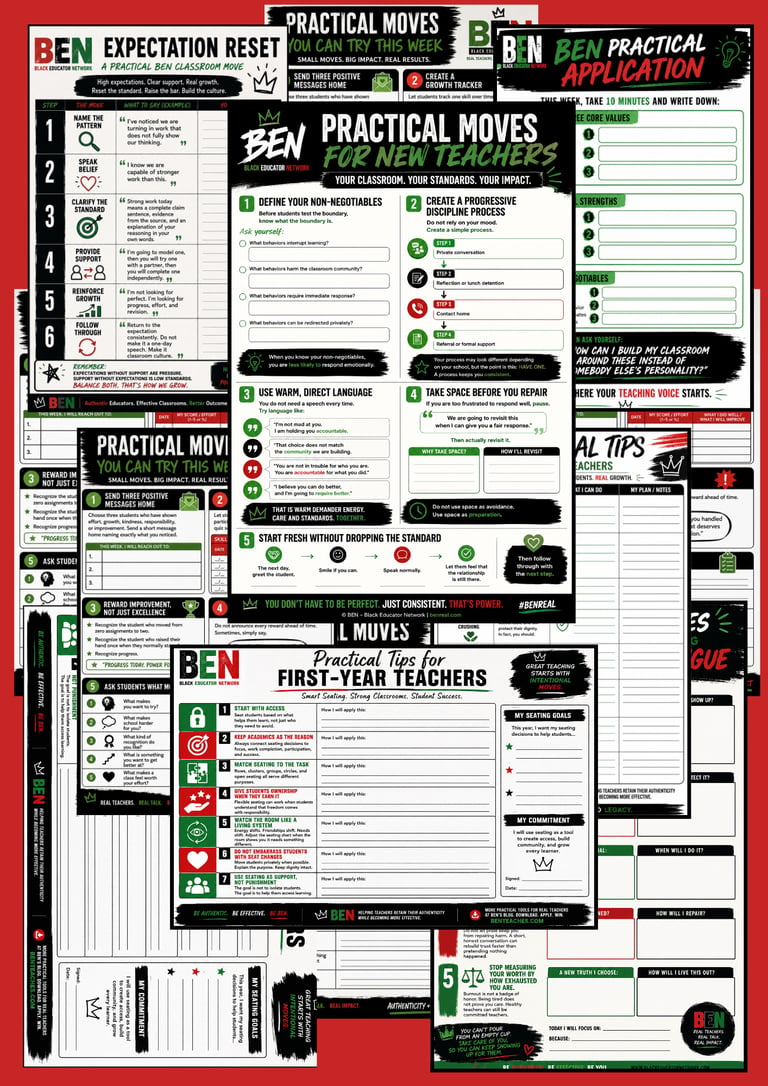
1. Start with access
Seat students based on what helps them learn, not just who they need to avoid.
2. Keep academics as the reason
Always connect seating decisions to focus, work completion, participation, and success.
3. Match seating to the task
Rows, clusters, groups, circles, and open seating all serve different purposes.
4. Give students ownership when they earn it
Flexible seating can work when students understand that freedom comes with responsibility.
5. Watch the room like a living system
Energy shifts. Friendships shift. Needs shift. Adjust the seating chart when the room shows you it needs something different.
6. Do not embarrass students with seat changes
Move students privately when possible. Explain the purpose. Keep dignity intact.
7. Use seating as support, not punishment
The goal is not to isolate students. The goal is to help them access learning.
Reflection Questions for Teachers
Before you change your seating chart, ask yourself:
Am I moving this student out of frustration or strategy?
Does this seat give the student better access to learning?
Have I explained the purpose clearly?
Does my room setup match the lesson activity?
Who needs proximity but is currently sitting too far away?
Who has earned more independence?
What distractions are built into the physical space?
Is this seating chart supporting classroom culture or just helping me feel more in control?
Those questions will keep your seating chart connected to purpose.
And purpose is what keeps management from becoming punishment.
Final Thought: The Goal Is Access
A seating chart will not fix every distraction.
It will not make every student focused. It will not stop every conversation. It will not turn seventh grade into a silent monastery.
But it can give your classroom structure.
It can protect learning.
It can reduce unnecessary conflict.
It can help students understand expectations.
It can give you better access to the students who need you most.
The goal is not control.
The goal is access.
The goal is learning.
The goal is creating a classroom where students understand that where they sit is not about punishment. It is about purpose.
Because a strong seating chart does not just ask, “How do I stop students from acting up?”
It asks, “How do I design a room where students have a better chance to succeed?”
That is the difference between managing bodies and building culture.
And BEN is always going to choose culture.