Subscribe to our newsletter
Enjoy practical advice, real talk, and notification when new resources drop.
Teacher Humanity and Setting Boundaries
Explore the importance of teacher humanity and setting boundaries in education. Learn about emotional fatigue, self-care for educators, and how to break the cycle of stress before it impacts students.
REAL TALK REFLECTION
Johnny Charles
7/3/20269 min read


The Butterfly Effect
We often ask students to leave their problems at the door.
But let’s be honest.
Who asks teachers to do the same?
Teachers are told to be patient. Be energetic. Be positive. Build relationships. Differentiate instruction. Manage behavior. Contact families. Smile. Stay professional. Stay flexible. Stay calm. Stay available.
And somehow, we are supposed to do all of that while pretending life outside the school building does not exist.
That is not realistic.
That is not healthy.
And for Black educators especially, that expectation can get heavy. Because many of us are not just teaching content. We are also carrying representation, respectability politics, code-switching, community responsibility, racial fatigue, high expectations, and the pressure to be excellent in spaces where we are often watched harder, questioned quicker, and supported less.
So let’s tell the truth society often forgets.
Teachers are people first.
We do not live at school.
When the dismissal bell rings, we do not power down, plug ourselves into a storage closet, and download tomorrow’s lesson plans like an iPhone update.
We drive through traffic.
We pick up our children.
We stop by the grocery store.
We cook dinner.
We pay bills.
We care for aging parents.
We navigate marriages, friendships, grief, sickness, anxiety, parenting, uncertainty, and exhaustion.
Life keeps happening after the final bell.
Then the next morning, we are expected to walk into our classrooms fully charged and ready to teach the Silk Road, the Roman Empire, the scientific method, fractions, thesis statements, or primary sources like nothing happened.
But real life does not work that way.
Emotional Fatigue Does Not Stay Home
One of the greatest myths in education is that whatever happens at home stays at home.
It does not.
Stress follows us.
Grief follows us.
Financial pressure follows us.
Relationship struggles follow us.
Parenting follows us.
Fear follows us.
Disappointment follows us.
And just like our students carry invisible backpacks filled with life experiences, teachers carry invisible backpacks too.
That does not make us bad educators.
That makes us human.
The goal is not to pretend the backpack does not exist. The goal is to become aware that we are carrying it.
Because what we do not name, we often pass on.
That is the butterfly effect.
One heavy morning can become one sharp tone.
One sharp tone can become one student feeling embarrassed.
One embarrassed student can become one class period full of resistance.
One class period can shift the entire energy of the day.
That is how emotional fatigue moves.
Quietly.
Quickly.
And sometimes, unintentionally.
The Student Who Saw Right Through Me
During my first year of teaching, I was having a conversation with a student who loved being the class clown.
You know that student.
The one who could turn “take out your notebook” into a Netflix stand up special.
I was doing what I thought was a routine redirection. Nothing major. Just a calm, one-on-one conversation as part of my progressive discipline process.
Then he asked me something I was not expecting.
“Mr. Charles… is everything alright at home?”
That stopped me in my tracks.
Because I thought I was hiding whatever I was carrying.
Apparently, I was not.
That student noticed my energy before I noticed it myself.
I do not even remember exactly what I was dealing with at the time. But I remember the lesson clearly.
Students are paying attention.
Not just to what we teach.
They are paying attention to how we enter the room.
How we respond.
How we breathe.
How we look at them.
How fast we get irritated.
How present we actually are.
That day, I thanked him for asking. I told him teachers have lives outside of school too, and sometimes those things affect us.
But I also reminded him that his behavior still needed to be addressed.
Both things were true.
Life was affecting me.
His choices still mattered.
That conversation taught me something important:
Acknowledging your humanity does not weaken your authority.
It can actually strengthen your authenticity.
Because students do not need a robot in front of the room. They need a real adult who can model honesty, accountability, and self-control even while carrying real life.
Showing Up Does Not Mean Showing Up Perfect
When life is heavy, your first responsibility may be simple.
Show up.
Sometimes physically showing up is the victory.
There are days when getting out of bed, getting dressed, getting in the car, walking into the building, and standing in front of students is already a testimony.
But after we show up physically, we have to show up consciously.
That means asking ourselves some honest questions before the day starts:
What am I carrying today?
How might this affect my patience?
How might this affect my tone?
Am I responding to this student, or am I reacting to something that happened before I arrived?
What do I need to be careful not to pass on?
This is not about guilt.
This is about awareness.
Self-awareness does not erase emotional fatigue. But it can stop emotional fatigue from quietly running your classroom.
Because when we are not aware of what we are carrying, we may start treating students like they packed the bag.
And they did not.
When Stress Starts Showing Up in Your Teaching
Every educator eventually experiences a season where stress leaks into the classroom.
You become shorter.
Less patient.
More reactive.
More tired.
More distant.
More easily irritated.
More focused on compliance than connection.
And if we are honest, sometimes we know it is happening while it is happening.
That does not mean you are a terrible teacher.
It means you are a teacher who needs to pause, reflect, and repair.
One of the biggest mistakes educators make is hiding behind the phrase:
“That was not my intention.”
Intentions matter.
But students experience impact.
A student does not feel your intention. They feel your tone. They feel your frustration. They feel your body language. They feel whether the correction was fair or whether they caught the leftovers of your stress.
So instead of only asking, “What did I mean by that?”
We also have to ask:
How did my tone affect this student?
How did my frustration affect the class?
Did I correct the behavior, or did I embarrass the child?
What responsibility do I need to take?
Then, when necessary, repair it.
Pull the student aside.
Name it.
Keep it professional.
Keep it honest.
You do not have to tell students all your business. But you can say:
“Earlier, my tone was sharper than it needed to be. Your behavior still needed to be corrected, but I could have handled that better.”
That kind of accountability does not make students respect you less.
It often makes them respect you more.
Because students do not expect perfection.
They respect adults who can own their impact.
“Leave It at the Door” Is a Goal, Not Reality
We have all heard the phrase:
“Leave your problems at the door.”
I understand the intention behind it.
But let’s be real.
That is a goal, not a daily reality.
Most humans do not perfectly drop off grief, stress, bills, arguments, anxiety, and exhaustion at the classroom door like Amazon packages.
We carry things in.
The question is not whether we carry life into the classroom.
The question is whether we are aware enough to keep from handing it to students.
Think about traffic.
Somebody cuts you off in the morning.
Now you are irritated.
Ten minutes later, another driver makes a small mistake, and suddenly you are reacting like they personally attacked your bloodline.
But that second driver did not create your frustration.
They inherited it.
That is the butterfly effect.
Unprocessed frustration travels.
The same thing happens in schools.
A stressed administrator impacts a teacher.
A stressed teacher impacts a student.
A stressed student impacts another student.
One interaction becomes twenty.
One adult’s unprocessed stress can become a classroom’s emotional climate.
That is why awareness matters.
The goal is not to pretend emotions do not exist.
The goal is to stop the chain reaction before it reaches someone else.
Protecting Your Peace Is Not Selfish
One of the healthiest things a teacher can build is boundaries.
And let me say this clearly for the new teachers and the Black teachers who feel pressure to be everything for everybody:
Boundaries are not selfish.
Boundaries are survival.
Without boundaries, emotional depletion becomes your normal.
Think about how many people need something from you every day.
Your students.
Your students’ families.
Your colleagues.
Your administrators.
Your own family.
Your spouse.
Your children.
Your friends.
Your community.
And then there are the students who are not even on your roster but still know you, still speak to you, still want your attention, still need your presence.
That emotional output adds up.
For me, one boundary is lunch.
Lunch is sacred.
My classroom door stays locked.
The lights are low.
Music might be playing.
Sometimes I read.
Sometimes I journal.
Sometimes I pray.
Sometimes I take my shoes off and just sit in silence.
What I do not do is answer emails.
I do not meet with students.
I do not take work requests.
I do not schedule conversations.
That is not selfish.
That is maintenance.
Another boundary?
I rarely give away my planning period to cover another class.
Not because I do not care.
I care deeply.
But I also know what happens when I keep saying yes.
Eventually, I become emotionally bankrupt.
And an emotionally bankrupt teacher cannot consistently give students their best.
Boundaries protect your capacity to care.
They protect your patience.
They protect your creativity.
They protect your joy.
And joy matters in this work.
Recovery Is Part of the Job
In education, we talk a lot about productivity.
Lesson plans.
Data.
Assessments.
Emails.
Meetings.
Interventions.
Documentation.
But we do not talk enough about recovery.
Recovery is not laziness.
Recovery is preparation.
You cannot pour from an empty cup, but let’s take it further than that.
You cannot teach from an exhausted spirit forever.
Eventually, the body keeps score.
Eventually, the mind starts checking out.
Eventually, the heart gets tired of caring without being cared for.
For me, recovery looks different depending on the season.
During the school week, recovery looks like journaling, walking, protecting my sleep, and creating quiet moments where nobody needs anything from me.
During longer breaks, recovery looks like reading, hiking, drawing, and taking day trips around my state.
During the summer, recovery looks like slowing down completely.
Therapy.
Church.
Being fully present as a husband.
As a father.
As a son.
As a brother.
As a creator.
As Johnny.
Not just Mr. Charles.
Because before I was a teacher, I was a human being.
And I need to reconnect with that person every year.
So do you.
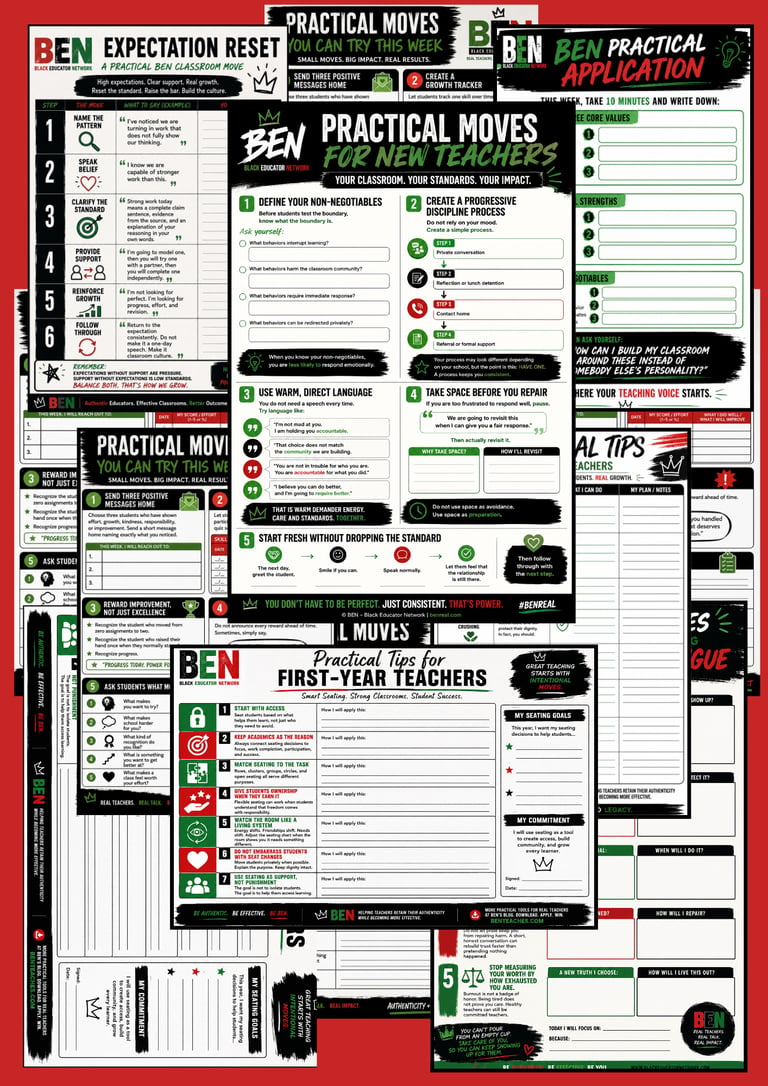
Practical Moves for Teachers Carrying Emotional Fatigue
This reflection is not just about naming the problem. It is also about building a practice.
Here are a few practical moves that can help:
1. Do a two-minute emotional check-in before students arrive.
Ask yourself, “What am I carrying today?” Name it honestly. You do not have to fix it in that moment. Just identify it so it does not sneak into your teaching.
2. Choose one boundary and protect it.
Start small. Maybe lunch is quiet time. Maybe your planning period is protected twice a week. Maybe you stop checking email after a certain time. One boundary can change your whole rhythm.
3. Create a reset ritual.
This could be music before school, a short walk, prayer, journaling, stretching, deep breathing, or sitting in silence for three minutes. Your nervous system needs routines too.
4. Repair quickly when your stress spills over.
Do not let pride keep you from repairing harm. A short, honest conversation can rebuild trust faster than pretending nothing happened.
5. Stop measuring your worth by how exhausted you are.
Burnout is not a badge of honor. Being tired does not prove you care. Healthy teachers can still be committed teachers.
The Butterfly Effect Works Both Ways
Here is the beautiful part.
The butterfly effect is not only negative.
One repaired conversation can change a student’s week.
One healthy boundary can preserve your joy.
One honest apology can strengthen trust.
One peaceful teacher can shift the whole room.
One emotionally healthy adult can interrupt a chain reaction that has been following a child for years.
That is why your wellness matters.
Not because teaching is only about you.
But because healthy teachers help create healthier classrooms.
And healthier classrooms change lives.
For Black educators, this matters deeply.
Because our presence in schools is powerful.
Our voice matters.
Our wisdom matters.
Our cultural lens matters.
Our ability to connect, redirect, challenge, affirm, and love students through the work matters.
But we cannot keep giving from a place of depletion and call it dedication.
At some point, we have to choose sustainability.
Not perfection.
Sustainability.
Final Reflection
You cannot always control what follows you into school.
But you can become aware of it.
You can own its impact.
You can repair what it touches.
You can establish boundaries that protect your capacity.
You can recover before burnout becomes your identity.
Because students do not need teachers who pretend to be perfect.
They need teachers who model what it looks like to carry life with honesty, humility, resilience, and hope.
That is the kind of butterfly effect our schools need.
Not more fake-perfect teaching.
Not more smiling through exhaustion.
Not more educators quietly breaking down while trying to hold everybody else together.
We need teachers who are authentic and effective.
Teachers who know how to reflect, reset, repair, and return with purpose.
Because great teaching does not begin with perfection.
It begins with humanity.